Decoding Your Newborn's Green Poop: A Pediatrician's Guide to What's Normal and When to Worry
Verified By Dr. Vinod Bakshi | 29-Nov-2025
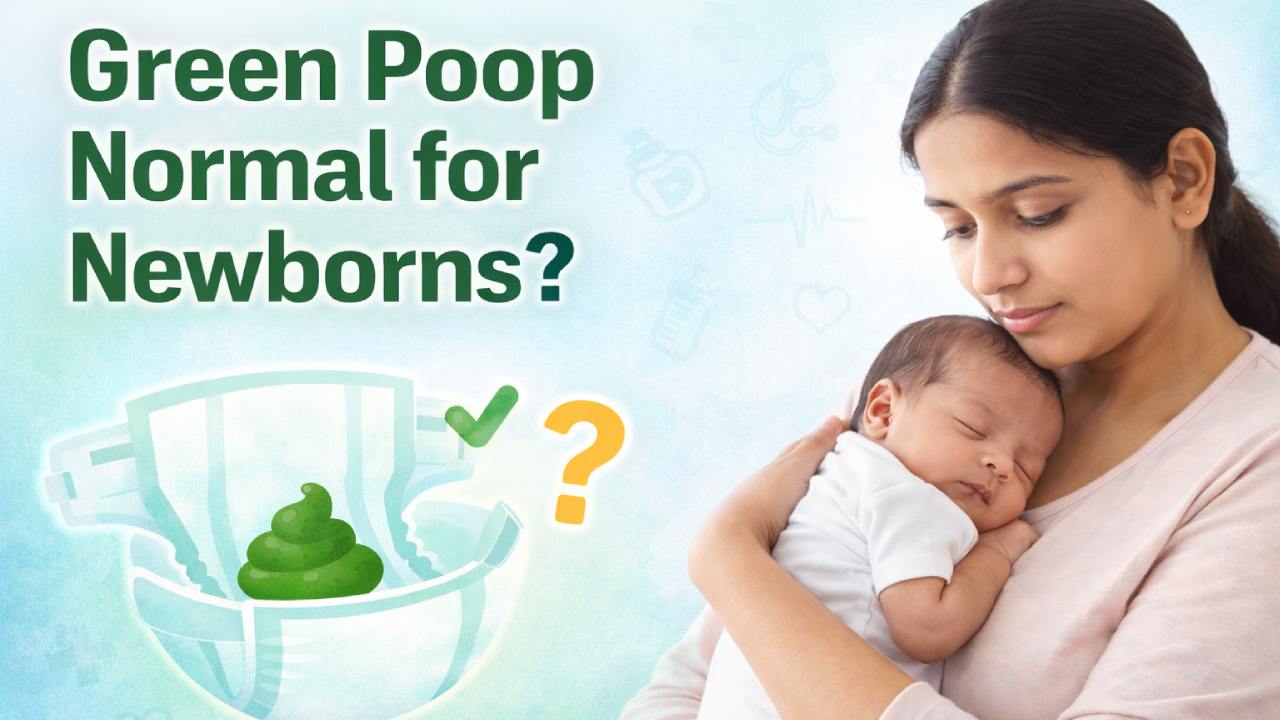
Dr. Vinod Bakshi, Consultant Pediatrician at Kailash Hospital, Noida, gently examines a one-week-old infant while addressing the anxious parents. "In my OPD, the color of a baby's diaper is one of the most common, yet most worrying, topics for new parents. When you see green stool newborn, it's easy to panic. But in the vast majority of cases, that green newborn poo is a perfectly normal part of your baby's digestive system learning to function in the outside world."
The palette of a newborn's diaper can be startling, ranging from mustard yellow to bright green. Understanding the causes behind green poop in newborn babies is key to easing parental anxiety and ensuring infant well-being. This guide, drawing on the extensive experience of Dr. Vinod Bakshi and the dedicated pediatric team at Kailash Hospital, Noida, will help you decipher your baby's diapers and know when to seek expert advice.
Table of Content
Before we focus on green, it's crucial to understand the entire journey of newborn stool.
1. First Few Days: Meconium
The very first stools your baby passes are called meconium. This is a thick, tar-like, and dark greenish-black substance. It's made up of everything the baby ingested in the womb: amniotic fluid, skin cells, and mucus. This is completely normal and a sign that your baby's bowels are working correctly.
2. Transitional Stools (Days 3-5)
As your baby starts feeding (whether breastmilk or formula), the stool transitions. It becomes lighter in color—often a green and yellow newborn poop—and less sticky. This is the body clearing out the meconium and adapting to digestion.
3. Established Stools
After the first week, the stool settles into a more predictable pattern, which is heavily influenced by the baby's diet.
Also read: Toxic Skies, Vulnerable Lungs: How Urban Air Pollution Is Impacting Our Children's Health
Seeing a green color poop of newborn is rarely a cause for alarm. Here are the most frequent, benign causes:
1. Foremilk/Hindmilk Imbalance (In Breastfed Babies)
This is the most common reason for green, frothy, or watery stools in a breastfed baby.
- The Science: Breast milk changes during a feed. The initial "foremilk" is thinner, rich in lactose (sugar) and water. The later "hindmilk" is richer in fat.
- What Happens: If a baby feeds frequently but for short durations, they may fill up on foremilk without getting to the fatty hindmilk. The high lactose content and lower fat can lead to rapid digestion and green stool newborn that may look frothy or seedy.
- Dr. Bakshi's Take: "This is not a sign of a problem with your milk. It's often a sign of a healthy milk supply. The solution is often to let the baby finish feeding on one breast before offering the second, ensuring they get the full spectrum of milk."
2. Normal Bile Processing
Bile is a digestive fluid produced by the liver that is naturally bright green. In the intestines, bacteria act on bile to turn it brown, giving stool its characteristic color. A newborn's digestive system is immature, and stool can sometimes pass through the gut so quickly that the bile doesn't have time to break down fully, resulting in green newborn poo.
3. Formula Feeding
Certain iron-fortified infant formulas can cause darker green stools. The iron in the formula can oxidize in the digestive tract, leading to a green color. Some formulas simply produce greener stools as a normal byproduct of their composition. This is not a sign that the formula is wrong for your baby, but it's something you can discuss with your Pediatrician in Noida.
4. Introduction of Solid Foods
When you start solids (around 6 months), green-colored foods like spinach, peas, and green beans can directly tint the stool. This is a normal and temporary effect.
5. Mother's Diet (For Breastfed Babies)
While less common, something in the mother's diet, such as green leafy vegetables, food coloring, or certain supplements, can sometimes influence the color of the baby's stool.
6. Teething
The excess saliva produced during teething is swallowed and can speed up digestion, leading to bile-rich, green stools.
7. Minor Tummy Bugs
A fleeting stomach bug can cause food to move through the intestines faster, leading to temporary green poop in newborn due to undigested bile.
8. Iron Supplements
If your baby is on prescribed iron supplements, this will almost certainly cause the stool to become dark green or even black.
While most green color poop of newborn is harmless, it can occasionally signal an underlying issue, especially when accompanied by other symptoms.
1. A Food Allergy or Intolerance
A cow's milk protein allergy (CMPA) is a common culprit. In this case, the green stool newborn is often accompanied by mucus (making it look slimy), blood streaks, severe diaper rash, vomiting, extreme fussiness, and poor weight gain.
- For Breastfed Babies: The mother may need to eliminate dairy from her diet.
- For Formula-fed Babies: Your pediatrician may recommend switching to a hypoallergenic formula.
2. A Viral or Bacterial Infection
If the green newborn poop is frequent, watery, and explosive (diarrhea), it could signal an infection. Key signs to look for include:
- Fever
- Lethargy (baby is unusually sleepy and difficult to wake)
- Dehydration (fewer wet diapers, no tears when crying, sunken soft spot)
- Blood in the stool
3. Hunger (In Breastfed Babies)
In some cases, consistently green stools can indicate that the baby is not getting enough milk. This is different from the foremilk/hindmilk imbalance. If the baby is not gaining weight appropriately and has green stools, it warrants a consultation with a lactation expert and a pediatrician to assess milk transfer.
4. Jaundice Treatment
Babies undergoing phototherapy for jaundice often have frequent, bright green, loose stools as the body processes the breakdown products of bilirubin. This is a normal and expected side effect of the treatment.
Also read: Infant Congestion: When Your Baby's Stuffy Nose Becomes an Emergency
Dr. Vinod Bakshi advises parents to look for a cluster of symptoms, not just the color of the stool alone. He recommends contacting a top Pediatrician in Noida at a facility like Kailash Hospital, Noida if you observe any of the following:
- The Green Stool is Persistent for more than 24 hours with no obvious cause (like a change in your diet or formula).
- It is Accompanied by Blood or Excessive Mucus.
- Your Baby Has a Fever (100.4°F or 38°C rectally for infants under 3 months).
- Signs of Dehydration: Fewer than 6 wet diapers in 24 hours, sunken eyes or soft spot, dry mouth, unusual lethargy.
- Your Baby is Extremely Fussy, Inconsolable, or appears to be in pain.
- Poor Weight Gain or weight loss.
"At Kailash Hospital, we never dismiss a parent's concern," says Dr. Bakshi. "We would much rather you bring your baby in for a check-up and have it be nothing, than ignore a potential problem. We can perform a simple stool test to check for infection or blood and do a thorough physical exam to put your mind at ease. As the best hospital in Noida for comprehensive pediatric care, we are equipped to handle everything from simple reassurance to complex allergic conditions."
The journey of parenthood is filled with moments of uncertainty, and the contents of a diaper often top the list. Remember, a single instance of green poop in newborn is almost never a crisis. It is a fascinating window into the complex and developing digestive system of your child.
As Dr. Vinod Bakshi of Kailash Hospital, Noida reassuringly concludes, "Your baby's stool will change color and consistency frequently. Focus on the baby, not just the poop. A baby who is happy, active, feeding well, and gaining weight is likely perfectly healthy, regardless of whether their poop is yellow, green, or a shade in between. Use the color as a clue, not a diagnosis. And when in doubt, never hesitate to reach out to your pediatrician. That's what we are here for."
Your vigilance, combined with expert medical guidance, is the best recipe for a happy, healthy baby.









 +91-9711918451
 international.marketing@kailashhealthcare.com